A broken tooth can happen in one quick moment – biting an unpopped popcorn kernel, taking a fall, or discovering that an old filling has weakened the surrounding tooth. The right broken tooth repair options depend on how much tooth structure remains, whether the nerve is affected, and where the break occurred. Prompt, thoughtful care can often preserve the natural tooth, relieve discomfort, and help prevent a small fracture from becoming a more complicated problem.
If the tooth is painful, sharp, loose, bleeding, or visibly broken, contact a dentist as soon as possible. Even when the area does not hurt, a crack or missing piece creates an opening where bacteria can enter and may make the tooth more vulnerable to further damage.
What to Do When a Tooth Breaks
First, rinse your mouth gently with warm water. If you can find the broken piece, place it in milk, saline, or a container with your saliva and bring it to your appointment. In some situations, particularly with a recently broken front tooth, it may be possible to reattach the fragment.
A cold compress against the outside of the cheek can help with swelling after an injury. If there is bleeding, apply gentle pressure with clean gauze. Avoid chewing on that side, and do not use the tooth to test whether it still feels stable. Sugar-free dental wax or temporary filling material from a pharmacy may cover a sharp edge briefly, but it is not a substitute for professional care.
Seek urgent evaluation if the break follows a significant facial injury, causes severe or lingering pain, exposes a red or pink area inside the tooth, or comes with swelling, fever, or difficulty swallowing. These symptoms can point to nerve involvement or infection.
Broken Tooth Repair Options, Based on the Damage
A dentist begins by examining the tooth, surrounding gums, bite, and X-rays when appropriate. A visible chip does not always show the full picture. Cracks may extend below the gumline or toward the root, while a tooth that looks substantially broken may still have enough healthy structure to restore.
Smoothing or reshaping for a tiny chip
For a very small chip, especially on a front tooth, gentle contouring may be all that is needed. The dentist smooths the rough edge so it does not irritate the tongue or catch on the lip. This conservative option works only when the damage is superficial and does not compromise the tooth’s strength or appearance.
Dental bonding for small to moderate breaks
Composite bonding uses tooth-colored resin to rebuild a chipped corner, repair a worn edge, or improve the appearance of a small fracture. It is often a comfortable, conservative choice because it usually requires minimal removal of healthy enamel.
Bonding can look natural and is typically completed in one visit. The trade-off is that composite is not as strong as porcelain or a full crown, especially for a heavily used back tooth or a large break. It can stain, chip, or wear over time and may need maintenance.
A filling or inlay/onlay when a cusp has fractured
When a portion of a back tooth breaks around an older filling or cavity, a new filling may be appropriate if enough solid tooth remains. For a larger area, an inlay or onlay can provide more support. These restorations are custom-made to replace the damaged portion without covering the entire tooth.
An onlay is sometimes called a partial crown because it can protect one or more chewing cusps. It is a valuable middle ground when a standard filling would be too weak but a full crown would remove more healthy structure than necessary. Material selection may include ceramic or other biocompatible options, based on the tooth’s needs, bite forces, appearance goals, and personal preferences.
A crown for a significantly weakened tooth
A dental crown covers the visible portion of a tooth, restoring its shape and helping distribute chewing pressure. Crowns are commonly recommended when a break is extensive, a tooth has a large failing filling, or the remaining structure is too thin to reliably hold a filling or bonding.
A well-designed crown can protect a tooth for many years, but it is not a cure for every crack. The tooth and gums beneath it still need daily care, and a crack that extends deeply into the root may have a less predictable outlook. Your dentist should explain why a crown is being recommended, how much tooth structure can be preserved, and which material best suits your health history and smile.
Root canal treatment when the nerve is involved
If a break exposes or inflames the pulp, the soft tissue containing the tooth’s nerve and blood supply, root canal treatment may be needed before the tooth is restored. Signs can include spontaneous throbbing, prolonged sensitivity to hot or cold, pain when biting, or swelling. However, some injured teeth have little pain at first, which is why an examination matters.
Root canal treatment removes infected or damaged pulp, cleans the inside of the tooth, and seals it to help prevent reinfection. A crown is often placed afterward because teeth that have lost significant structure are more likely to fracture under chewing pressure. Saving a natural tooth is usually beneficial when the root and surrounding bone are healthy enough to support it.
Extraction and replacement when the tooth cannot be saved
Sometimes a tooth is broken too far below the gumline, split into the root, or weakened by extensive decay or infection. In these cases, removing the tooth may be the healthiest option. Extraction is never a decision to rush, but delaying care for a non-restorable tooth can allow pain, infection, and bone loss to worsen.
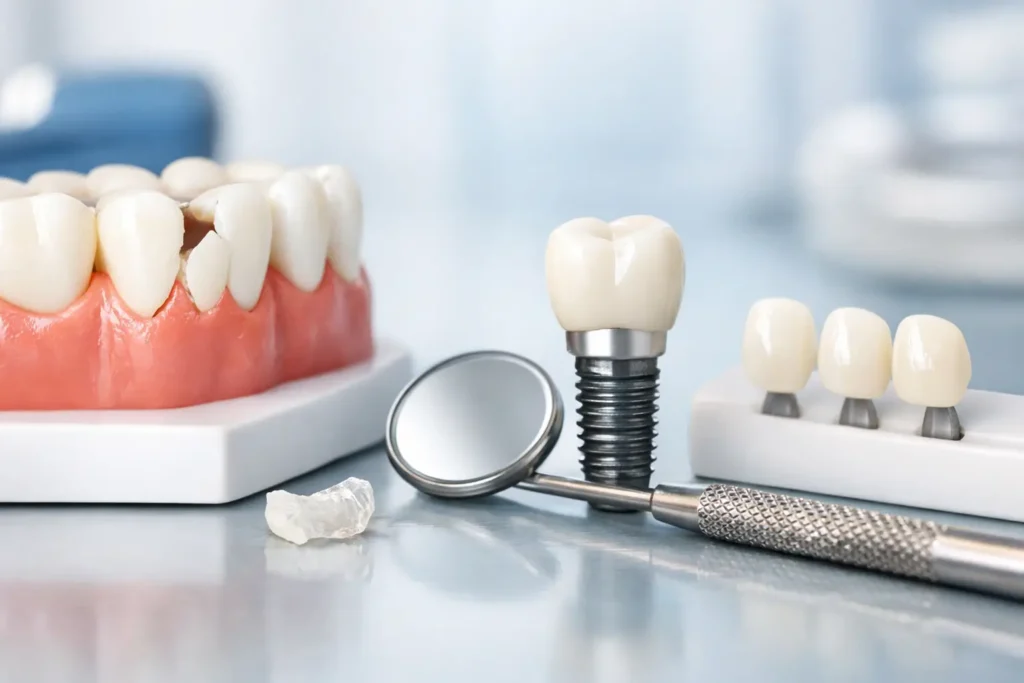
Replacement options may include a dental implant, bridge, or removable partial denture. A dental implant replaces the root as well as the visible tooth and can help preserve bone in the jaw. It requires adequate bone, healthy gums, and a healing period, so it is not always an immediate solution. A bridge may restore the space more quickly, though it generally relies on the neighboring teeth for support. The best choice depends on your oral health, timeline, budget, and long-term goals.
How Location and Symptoms Affect Treatment
A small chip on a front tooth and a fractured molar are not equivalent problems. Front teeth are more visible, so color matching and contour often guide treatment. Molars absorb much greater bite force, making durable coverage more important when a cusp breaks.
Pain also offers clues, but it does not provide a diagnosis on its own. Sensitivity that disappears quickly may come from exposed dentin. Sharp pain when releasing a bite can be associated with a crack. Constant pain, swelling, or a bad taste may signal infection. A dentist can assess the tooth with clinical testing and imaging rather than relying on symptoms alone.
A Gentle, Whole-Health Approach to Repair
Repairing a broken tooth is about more than making it look whole again. The treatment should support comfortable chewing, a stable bite, healthy gums, and the long-term function of your smile. For patients who are concerned about materials, sensitivities, or avoiding unnecessary treatment, an open conversation is appropriate.
A health-conscious dental approach considers the least invasive restoration that can reliably protect the tooth. It also considers factors that may have contributed to the break, such as clenching, grinding, acid erosion, untreated decay, or a bite that places excessive force on one area. If nighttime grinding is a concern, a custom night guard may help protect both the repaired tooth and the rest of your smile.
At Dr. Kamila Husain’s practice, treatment planning is designed to be clear and individualized. You should understand what is broken, what can reasonably be preserved, and the benefits and limitations of each recommended option before moving forward.
Can You Wait to Fix a Broken Tooth?
A minor chip without pain may not require same-day treatment, but it should still be evaluated soon. A break can have sharp edges, collect plaque, or grow larger with normal chewing. Larger fractures, loose pieces, pain, swelling, or trauma should be treated more urgently.
Until you are seen, choose softer foods and chew on the opposite side. Avoid very hot, cold, sticky, or hard foods. Do not place aspirin directly on the gum or tooth, as it can irritate soft tissue. Over-the-counter pain medication may help some adults when used as directed on the label, but it cannot address the cause of the damage.
A broken tooth can feel alarming, particularly when it affects your smile or interrupts a meal with sudden pain. With a timely exam and a treatment plan that respects both your comfort and long-term health, many damaged teeth can be repaired beautifully and conservatively.