A straighter smile can change more than the way your teeth look in photos. When patients ask how clear aligners affect airway, they are often really asking whether orthodontic treatment could influence breathing, sleep, jaw comfort, or overall wellness. It can – but the answer is not as simple as saying aligners either improve or harm the airway.
Clear aligners move teeth through a series of carefully planned, gentle changes. Depending on the starting bite, the treatment plan may create more room for the tongue, improve how the upper and lower jaws meet, or change the position of front teeth. Those changes can be relevant to airway function. They also need to be planned thoughtfully, because every mouth, jaw, and breathing pattern is different.
How clear aligners affect airway function
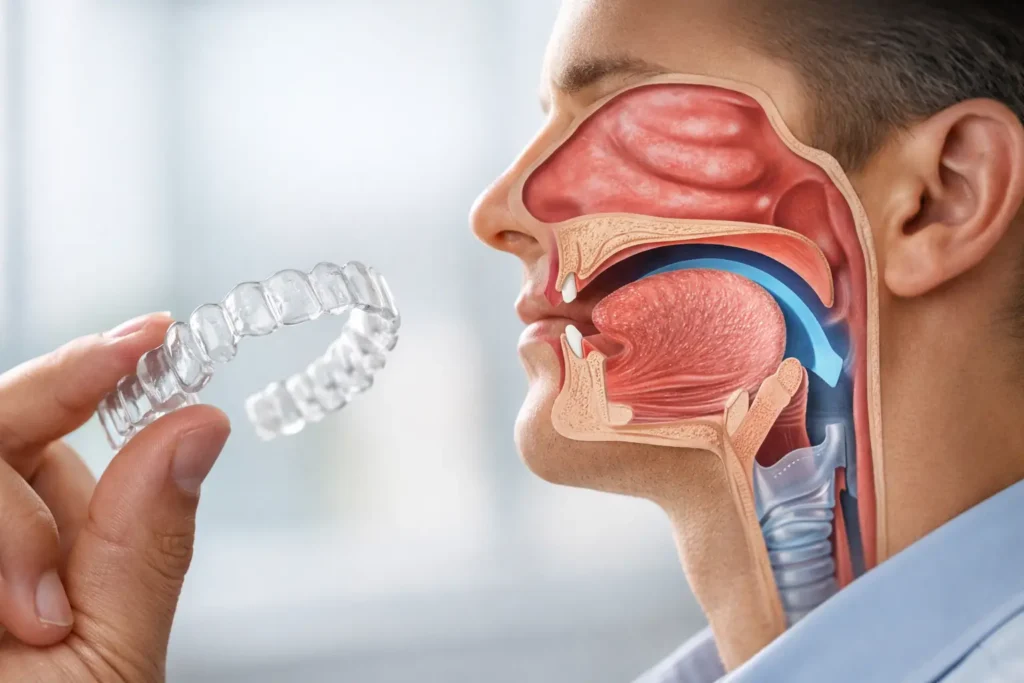
Your airway is the pathway air travels through your nose, mouth, throat, and into your lungs. In dentistry, the area behind the tongue and soft palate often receives attention because its size and stability can affect nighttime breathing. The tongue, jaw position, bite, nasal breathing, muscle tone, and surrounding soft tissues all play a role.
Clear aligners primarily move teeth. They are not a direct treatment for obstructive sleep apnea, enlarged tonsils, chronic nasal obstruction, or a structurally narrow airway. Still, tooth movement can influence the space available inside the mouth and the way the jaws come together. For some patients, that may support more functional tongue posture and a more comfortable bite. For others, the changes may have little measurable effect on breathing.
This is why airway-centered orthodontic planning starts with diagnosis, not with a promise that one appliance will solve every breathing concern.
Creating room within the dental arches
A narrow dental arch can leave the tongue with less room to rest comfortably. In appropriate cases, aligner treatment may broaden the dental arch by moving teeth into a healthier position within the supporting bone. This can improve dental crowding and, in some patients, provide more space for the tongue.
However, dental arch expansion is not the same as widening the skeletal structures of the face. In adults especially, clear aligners mainly create dentoalveolar changes – changes in tooth position and the bone immediately around the teeth. Significant skeletal expansion may require a different approach. A careful exam helps determine what is realistic, safe, and stable for your anatomy.
Bite changes can influence jaw posture
A deep bite, crossbite, open bite, or significant overjet can affect how comfortably the lower jaw rests and moves. Aligners can often correct these bite relationships. When the teeth fit together more harmoniously, some patients notice less strain in the jaw muscles or a more natural resting posture.
That does not mean moving the bite automatically opens the airway. The relationship is more nuanced. A lower jaw that sits too far back, for example, can be associated with reduced space behind the tongue in certain patients, but sleep-disordered breathing has many causes. Your dentist should consider the bite as one part of a broader health picture.
Retraction deserves careful consideration
In some orthodontic plans, front teeth are moved backward to reduce protrusion or create a more balanced appearance. This can be an appropriate choice for the right patient. Yet when substantial retraction is considered, especially for someone with breathing symptoms, limited tongue space, or a retrusive jaw, it should be evaluated carefully.
An airway-conscious approach does not assume that every patient needs expansion or that retraction is always harmful. It means looking beyond the straightness of the teeth. Facial balance, gum and bone support, tongue space, bite function, and breathing history should all inform the plan.
Airway symptoms worth discussing before aligner treatment
Many people do not connect their sleep or breathing concerns to a dental consultation. Sharing those details can help your dental team design treatment with greater context and refer you when needed. Mention symptoms such as frequent snoring, waking up gasping, persistent daytime fatigue, morning headaches, dry mouth on waking, chronic mouth breathing, or difficulty keeping your lips together at rest.
Children and teens may show different signs, including restless sleep, nighttime sweating, behavioral changes, bed-wetting, frequent sore throats, or a tendency to sleep with the mouth open. These symptoms do not diagnose an airway disorder on their own, but they are worth taking seriously.
If obstructive sleep apnea is suspected, a medical sleep evaluation is essential. A dentist may recognize risk factors and coordinate with a physician or sleep specialist, but a sleep study and medical assessment determine whether sleep apnea is present. Clear aligners should not replace that evaluation.
What an airway-centered aligner evaluation includes
A thoughtful consultation is about more than digital scans and before-and-after photos. Your provider should review your goals for your smile while also considering the function that supports it every day.
That may include a discussion of your health history, sleep quality, nasal breathing, snoring, clenching, jaw discomfort, and previous orthodontic treatment. Your dentist may assess your bite, arch shape, tooth position, gum health, facial profile, and the space available for the tongue. Photographs, digital scans, and X-rays can help create a precise plan. Three-dimensional imaging may be useful in select cases, but it should be recommended only when the diagnostic value justifies the radiation exposure.
For patients with significant airway concerns, collaboration can matter. An ear, nose, and throat specialist may evaluate nasal obstruction or enlarged tonsils. A sleep physician can assess suspected sleep apnea. A myofunctional therapist may help address tongue posture, swallowing patterns, and oral muscle habits when appropriate. Aligners can be one valuable piece of care, but they work best when the underlying concern is understood.
Can clear aligners improve sleep or breathing?
Some patients experience improvements in comfort, mouth breathing habits, or sleep-related symptoms after orthodontic treatment. This may occur when treatment improves crowding, bite function, or the room available for the tongue. But results vary, and it would be misleading to promise that aligners will improve sleep apnea or permanently resolve snoring.
Snoring can be related to nasal congestion, alcohol use, body weight, sleep position, medications, enlarged tissues, jaw anatomy, and sleep apnea. Similarly, mouth breathing may stem from habit, allergies, a deviated septum, or chronic nasal blockage. Orthodontics may support better oral function, but it cannot correct every cause.
The goal is not to make exaggerated claims about airway changes. The goal is to avoid overlooking breathing health while planning a beautiful, functional smile.
Why retention and habits matter after treatment
Once aligner treatment is complete, retainers help preserve the new tooth positions. Long-term stability also depends on the forces acting on the teeth every day. Tongue pressure, clenching, mouth breathing, and an unstable bite can all contribute to shifting over time.
If a patient has been breathing through the mouth because of a blocked nose or poor sleep, a retainer alone will not address that underlying pattern. Continuing to work with the appropriate healthcare providers can protect both overall health and orthodontic results. This whole-health perspective is especially valuable for patients who want their dental care to support comfort as well as appearance.
At Dr. Kamila Husain’s practice, clear aligner planning is approached with attention to the smile, bite, comfort, and the health factors that may affect lasting results. Treatment recommendations should feel clear and personal, never rushed or one-size-fits-all.
If you are considering clear aligners and have concerns about snoring, mouth breathing, sleep quality, or jaw position, bring them up before treatment begins. A good conversation can help ensure your smile plan respects the way you breathe, rest, and feel every day.