A cracked tooth rarely chooses a convenient moment. You may be protecting one side of your mouth while eating, worried that an old filling will break further, or trying to fit dental care between work and family responsibilities. This same day crown guide explains what a one-visit crown can do, what it cannot do, and how to decide whether it is the right approach for your tooth and your health.
A dental crown is a custom covering that restores a tooth’s shape, strength, and appearance after significant damage or decay. With same-day technology, a dentist can often prepare the tooth, design the restoration digitally, create it in the office, and bond it in place during a single appointment. For many patients, that means no temporary crown and no second visit for final placement.
How Same-Day Crowns Work
Traditional crowns typically require two appointments. At the first visit, the dentist prepares the tooth, takes an impression, and places a temporary crown while a dental laboratory creates the final restoration. At the second visit, the temporary is removed and the permanent crown is cemented.
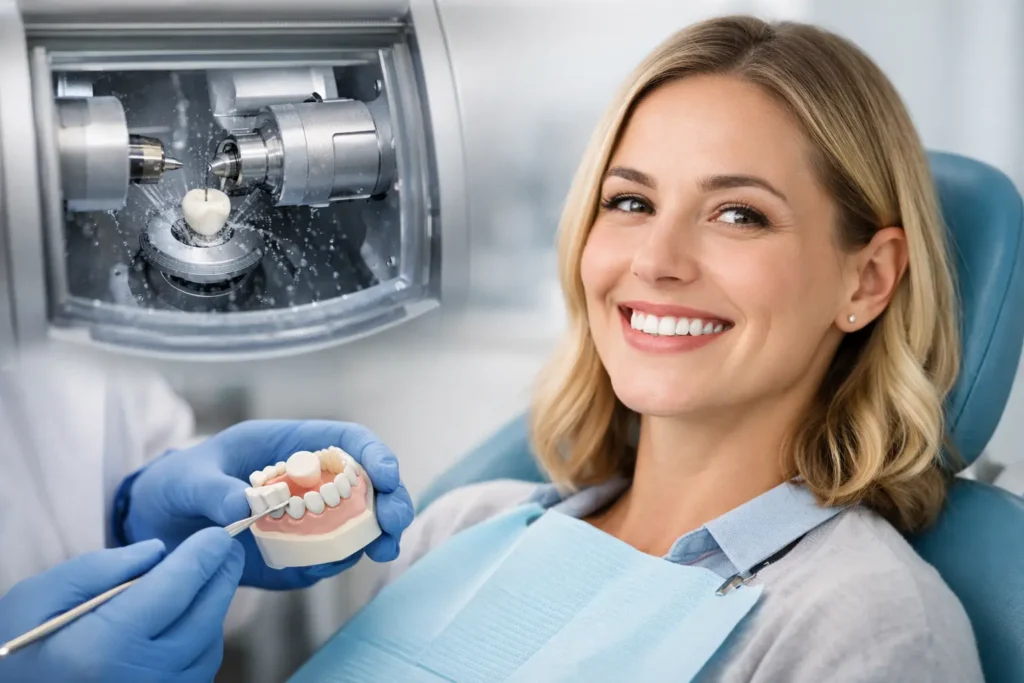
A same-day crown follows a different workflow. After examining the tooth and taking any needed digital images or X-rays, your dentist gently reshapes the damaged portion of the tooth so the crown can fit securely. A small intraoral scanner captures a detailed digital image of the prepared tooth and the surrounding bite. This avoids the need for many conventional impression materials.
The crown is then designed to match your bite and neighboring teeth. An in-office milling unit shapes the restoration from a high-quality ceramic block, and the dentist checks its fit, color, contours, and bite before bonding it into place. The process is precise, but it is not rushed. Careful bite adjustment matters because a crown should feel comfortable when you chew and protect the tooth underneath.
Who Is a Good Candidate for a One-Visit Crown?
Same-day crowns can be an excellent option for many adults and teens, especially when a tooth has a large failing filling, a fracture, extensive decay, or wear that has weakened the remaining structure. They are also commonly used after root canal treatment, when a back tooth needs protection from future cracking.
The best choice depends on the condition of the tooth, not simply on the desire to finish quickly. A dentist will consider how much healthy tooth structure remains, whether decay extends below the gumline, the health of the nerve and roots, your bite, and whether you clench or grind your teeth. If gum disease is active or there is an untreated infection, those concerns may need attention first.
Front teeth can sometimes receive same-day crowns, but cosmetic expectations deserve a thoughtful conversation. Layered laboratory-made ceramics may offer additional options for highly detailed color blending and translucency in certain visible areas. For a back tooth, where strength and function are often the main priorities, a same-day ceramic crown may be particularly well suited.
A one-visit crown is also not always the best plan when a tooth needs complex reconstruction, a post, surgical care, or more time for healing. Choosing a two-visit crown in those situations is not a setback. It may be the more conservative, dependable path for a healthy long-term result.
Benefits Beyond Fewer Appointments
The obvious benefit is convenience. Completing treatment in one visit can reduce time away from work, school, and family routines. It can also be helpful when you have a damaged tooth that needs timely protection and you do not want to manage a temporary crown for several weeks.
Temporary crowns are useful, but they can occasionally loosen, feel bulky, or require extra care around sticky foods. With a same-day crown, the final restoration is placed before you leave the office. You can return to normal brushing and flossing around the crown with guidance from your dental team.
Digital scanning can also improve the patient experience. Many people find it more comfortable than traditional impression trays. Digital design allows the dentist to evaluate the crown’s contours and contact points in detail, while the final bite is checked in person before the appointment ends.
For health-conscious patients, the treatment conversation should include materials as well as mechanics. Modern ceramic crowns are metal-free and designed to be durable and natural-looking. Your dentist can discuss the restoration material, its suitability for the location of your tooth, and any individual sensitivities or wellness preferences you may have. A biological or holistic approach does not mean compromising on function. It means considering the restoration in the context of your whole oral health, comfort, and long-term needs.
What the Appointment Feels Like
Most same-day crown appointments take longer than a routine filling because preparation, scanning, design, milling, and final bonding all happen on the same day. The timing varies by tooth and complexity, but patients should generally plan for a few hours rather than a quick visit.
The tooth and surrounding area are numbed before preparation, so you should not feel pain during treatment. You may notice pressure, vibration, and water from the dental instruments. If dental anxiety has kept you from addressing a damaged tooth, say so early. Gentle pacing, clear explanations, breaks when needed, and comfort options can make a meaningful difference.
While the crown is being created, you can rest in the treatment room. Once it is ready, the dentist will try it in and make sure it looks natural, sits properly at the gums, and meets your opposing teeth correctly. You may be asked to bite on thin marking paper several times. That small step helps prevent a crown from feeling too high later.
After the numbness wears off, mild tenderness in the gums or jaw is possible for a day or two. Your tooth may also have brief sensitivity to temperature after treatment, particularly if it was already irritated. Call your dental office if pain is severe, worsens instead of improves, or if your bite still feels uneven after the numbness is gone.
Caring for a Same-Day Crown
A crown protects a vulnerable tooth, but it does not make the tooth immune to future problems. Decay can still develop at the edge where the crown meets the natural tooth, and gum inflammation can affect the tissues supporting it. Daily home care and regular dental visits remain essential.
Brush twice daily with a soft toothbrush and fluoride toothpaste. Floss once a day, sliding the floss gently down and out from the side of the tooth instead of snapping it forcefully against the gums. If you have a bridge, implant restoration, or other dental work nearby, your dentist may suggest specialized cleaning tools.
Ceramic crowns are strong, but they are not meant to open packages, crack ice, or replace a tool. If you grind or clench your teeth, a night guard may help protect both your crown and your natural enamel. Frequent jaw tension, morning headaches, and chipped teeth are all worth mentioning during your visit.
Questions Worth Asking Before You Decide
A clear treatment conversation should leave you feeling informed rather than pressured. Ask why a crown is recommended instead of a filling, onlay, or another conservative option. Ask what material is proposed, how it will perform in that part of your mouth, and whether same-day treatment is appropriate for your bite.
It is also reasonable to ask about the expected lifespan of the crown, what your insurance may cover, and what financing options are available. No crown lasts forever, but excellent hygiene, regular exams, and protecting your bite can help a well-made restoration serve you for many years.
If a tooth is cracked, painful, or repeatedly losing a large filling, waiting can allow the damage to grow. A calm evaluation can clarify whether a same-day crown offers the protection you need now or whether another treatment would better support your long-term oral health. The right next step is the one that helps you eat, smile, and feel comfortable without asking more of your tooth than it can safely handle.