
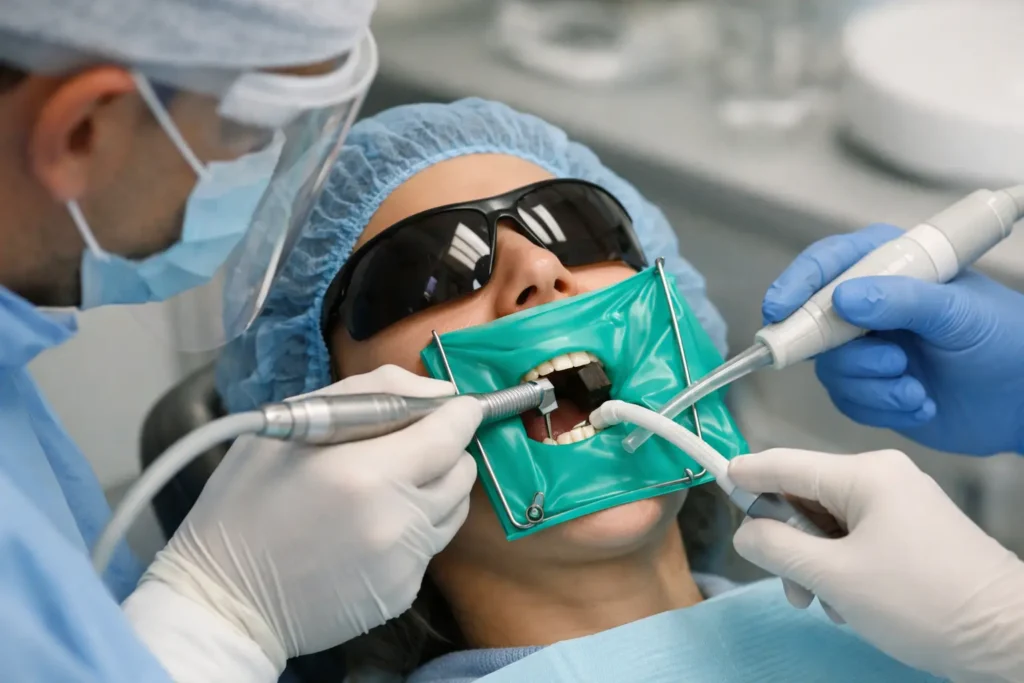
A filling that has been in place for years may look unchanged from the outside, yet you may be wondering whether it is still the right material for your health, comfort, and dental needs. SMART mercury amalgam removal is a structured approach to replacing silver-colored amalgam fillings with added protective measures designed to reduce exposure to mercury-containing particles and vapor during the procedure.
For patients who prefer a more biological approach to dentistry, the goal is not to create fear around existing fillings. It is to make a thoughtful, informed plan. A healthy, intact filling does not always need to be removed immediately. But if an amalgam filling is cracked, leaking, worn, associated with decay, or no longer fits your treatment goals, removal may be worth discussing with a dentist trained in the SMART protocol.
What Is SMART Mercury Amalgam Removal?
SMART stands for Safe Mercury Amalgam Removal Technique. It is a set of precautionary measures established by the International Academy of Oral Medicine and Toxicology, or IAOMT, for the removal of dental amalgam fillings.
Amalgam has been used in dentistry for more than a century because it is durable and cost-effective. It contains a mixture of metals, including elemental mercury. When an amalgam filling is drilled out, small particles and mercury vapor can be released. The SMART approach is intended to limit the amount that may be inhaled or swallowed by the patient and reduce exposure in the treatment room.
This is different from simply removing a filling with a drill and replacing it. The procedure uses specific isolation, suction, air-filtration, and protective steps. For health-conscious patients, that added level of planning can offer valuable peace of mind.
Why the Removal Method Matters
Every dental procedure involves clinical judgment. When a filling needs replacement, the dentist must balance the condition of the tooth, the material selected for the new restoration, your medical history, and your comfort level.
The removal process matters because amalgam should be sectioned and lifted out in larger pieces whenever possible, rather than ground away unnecessarily. This can help minimize debris. Effective evacuation and isolation are also central to keeping the field controlled.
SMART precautions do not mean a procedure is risk-free, and they are not a substitute for individualized medical advice. They are a practical framework for reducing avoidable exposure while the dentist completes necessary restorative care. Patients who have specific health conditions, sensitivities, or concerns should share them before treatment so the care plan can be tailored appropriately.
What to Expect During a SMART Procedure
Your appointment should begin well before the filling is removed. A careful examination, dental imaging when appropriate, and a conversation about your goals help determine whether replacement is recommended. Your dentist will also evaluate how much healthy tooth structure remains and whether a filling, inlay, onlay, or crown will best protect the tooth afterward.
Protective preparation
During SMART mercury amalgam removal, the treatment area is carefully prepared to help isolate the tooth and manage particles. Depending on your needs and the office protocol, this may include a protective barrier around the mouth and face, a dental dam to separate the tooth from the rest of the mouth, and supplemental oxygen delivered through a nasal mask.
High-volume suction is used close to the tooth, while additional evacuation equipment may be positioned nearby. Air filtration and ventilation measures help manage the clinical environment. The dental team also uses appropriate protective equipment as part of a safety-focused setup.
Controlled filling removal
Once the area is isolated, the amalgam is sectioned into manageable pieces and removed as conservatively as the tooth allows. The dentist works with water and suction to limit heat and capture debris. This approach is designed to preserve as much healthy tooth structure as possible while avoiding unnecessary grinding of the old filling.
After removal, the tooth is thoroughly cleaned and evaluated. Sometimes the underlying tooth is in good shape and can receive a new restoration right away. In other cases, hidden decay, fractures, or weakened cusps may change the recommended treatment. Clear communication at this point matters, because the best restoration is not always the smallest one.
Restoring the tooth
Many patients choose tooth-colored composite resin after an amalgam filling is removed. Composite can blend naturally with the tooth and often allows for a more conservative restoration. For larger areas, ceramic inlays, onlays, or crowns may offer better long-term strength and coverage.
There is no single best material for every person or every tooth. The location of the filling, bite forces, history of clenching or grinding, moisture control, and aesthetic preferences all influence the choice. A holistic dental approach also considers biocompatibility and your individual health history when discussing materials.
When Replacing Amalgam Fillings May Make Sense
A desire for metal-free dentistry is one reason patients explore replacement, but it is not the only one. Old fillings can deteriorate over time. Their edges may no longer seal well against the tooth, which can allow bacteria to enter and contribute to decay beneath the restoration. Teeth with large amalgam fillings may also become more vulnerable to cracks as the surrounding structure weakens.
Replacement may be recommended when a filling is fractured, there is recurrent decay, the tooth has a crack, the filling is causing functional or cosmetic concerns, or a different restoration is needed to protect the tooth. On the other hand, removing a small, stable filling solely because it is old may not always be the most conservative choice.
That is why a personalized assessment is more useful than a blanket recommendation. The right timing depends on what your examination shows and what matters most to you.
Preparing for Your Appointment
Most patients can eat normally before a filling replacement unless they have been given instructions for sedation or another specific reason. Arrive ready to discuss medications, allergies, past reactions to dental materials, and any medical diagnoses that may affect treatment planning.
If dental visits make you anxious, say so early. Comfort measures can make a meaningful difference, whether you need more time for questions, numbing support, a calm pace, or options to help you relax. A gentle appointment is not just about the procedure itself. It is about knowing what will happen next and feeling heard throughout the visit.
For patients replacing several fillings, treatment can often be phased over more than one visit. This may be preferable when multiple teeth need attention, when the restorations are large, or when you simply prefer shorter appointments. Your dentist can explain the advantages of completing care in stages versus addressing several teeth at once.
Recovery and Long-Term Care
After the anesthetic wears off, mild tenderness at the injection site or treated tooth can occur. If you receive a composite filling, you can generally return to normal activities the same day, although it is wise to avoid chewing on the numb side of your mouth. If your bite feels uneven once numbness fades, contact the office. A small adjustment can prevent persistent sensitivity or strain.
Your new restoration still needs daily care. Brushing with fluoride toothpaste, cleaning between teeth, maintaining regular exams, and addressing clenching or grinding can all help protect the tooth. If a night guard is recommended, wearing it consistently may reduce the risk of cracks in both natural teeth and restorations.
Choosing a Provider for SMART Amalgam Removal
Experience, communication, and attention to detail should all be part of your decision. Ask how the office isolates the tooth, manages particles and vapor, selects replacement materials, and evaluates whether removal is necessary in the first place. You deserve direct answers without pressure.
At Dr. Kamila Husain’s Houston practice, patients can discuss mercury amalgam replacement in the context of their full oral health, not as a one-size-fits-all procedure. The focus is on understanding the condition of each tooth, using careful techniques, and helping you choose a restorative plan that feels right for your health and future smile.
If an old silver filling has you concerned, begin with an examination and an honest conversation. The most reassuring next step is not rushing into treatment. It is getting clear guidance about what your tooth needs and how to protect it with care.