Losing a tooth may appear to be a cosmetic problem, but it could be an indication of a greater dental concern called hypodontia. Hypodontia is the hereditary loss of teeth, and it may occur in children and adults. It may be one or two lost teeth, or several lost permanent teeth. We need to know the underlying cause as well as the way to treat it in order to ensure that we have a healthy smile and functioning of the mouth.
This complete guide will focus on what hypodontia is, its causes, its diagnosis, the most common missing teeth, and possible treatment options. Additionally, we are going to answer popular questions like when to be worried that children have not developed permanent teeth yet.
What is Hypodontia?
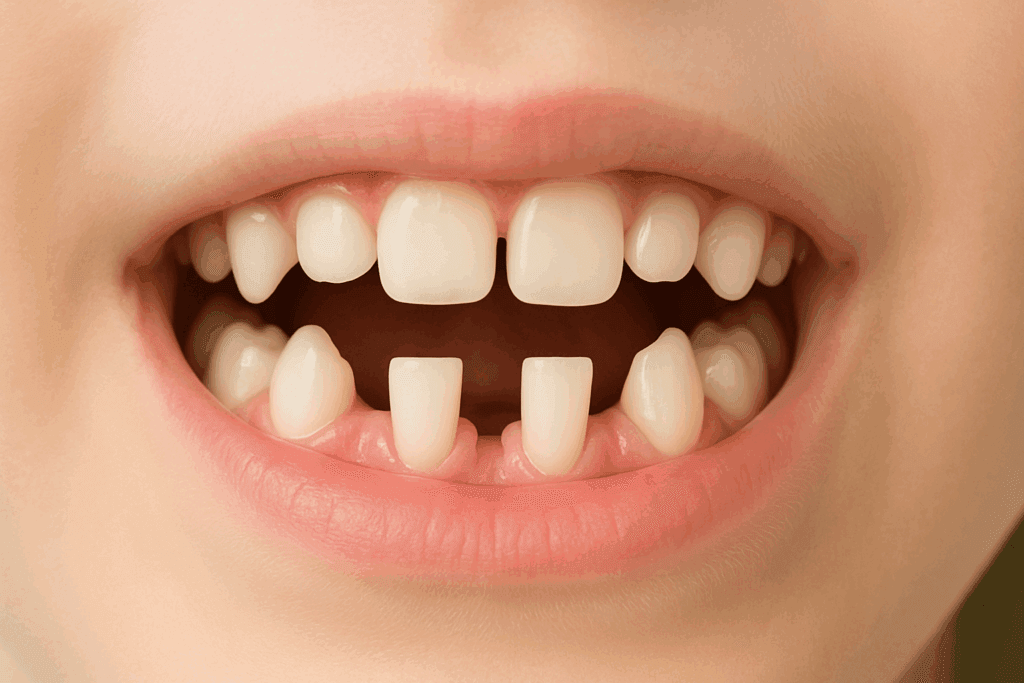
Hypodontia, missing teeth medical term, is used to refer to unformed missing teeth. This dental condition is normally manifested during childhood when the permanent teeth do not sprout once the baby teeth have shed. It may vary in terms of loss of a single tooth to several teeth, yet when it is the case of the lack of six or more teeth, it is denoted by oligodontia. A more extreme variation, when none of the teeth have appeared, termed anodontia, is extraordinarily rare.
However, the most common missing teeth in hypodontia cases are:
- Second premolars
- Upper lateral incisors
- Third molars (wisdom teeth)
Causes of Hypodontia Teeth
The occurrence of a lack of teeth may be due to either genetic or environmental factors. The hypodontia teeth are often hereditary, and they are also related to syndromes like ectodermal dysplasia or cleft lip/palate. It may, however, be infrequent in healthy people as well. Some of the greatest reasons are:
- Genetic mutations
- Family history of missing teeth
- Chemotherapy or radiation in the tooth growing stage
- Inflammation or trauma in early childhood
Detection during the early stages is very important since the absence tooth issues may result in functional, aesthetic, and psychological difficulties in the course of growth experienced by a child.
When Should I Worry About Permanent Teeth Not Coming in?
At the age of 7 or 8, should your child not have permanent teeth yet, you need to have this problem examined by your dentist. Adult teeth usually come out at the age of 6 and move on till early teens in most children. A delay may not necessarily be an indication of hypodontia but it should be looked into especially where there are no signs of baby teeth loosening and falling out.
The first probable sign of diabetic teeth is dental X-rays. It is able to display whether the permanent teeth are found just under the gums or are completely absent. It is possible to block complications and provide improved treatment results due to early intervention.
Missing Teeth Problems
One missing tooth is enough to cause a chain reaction of dental problems over time. When there are missing permanent teeth in multiples, the problems increase to include:
Misalignment and changes in neighboring teeth
- Problems biting and chewing
- Speech problems
- Tooth loss leading to the loss of the jawbone in these areas of tooth loss
- Social anxiety about appearance
In case of the absence of upper lateral incisors, canines can be displaced anteriorly which leads to the occurrence of bite complications and distortion of the facial symmetry. This is the reason why the treatment of hypodontia may sometimes be multidisciplinary.
What is the Diagnosis of Hypodontia?
The diagnosis normally takes place after a dental visit to the dentist when the eruption patterns on the teeth of a child are observed. Dentists normally utilise:
- Dental X-rays in panoramic view
- Dental casts
- Computerized scans
These helps in affirming the loss of a tooth, and whether it was by delayed eruption or actual congenital absence.
Hypodontia Treatment
Treatment of hypodontia has no one-size treatment. This is done depending on the quantity of the teeth that are missing, the places they are missing and the age of the patient. The most common ones are as follows:
1. Braces or Invisalign (Orthodontic Treatment)
There are small gaps between teeth due to missing teeth, or in order to have implants or bridges, it is possible to use Braces or Invisalign in Houston, TX. Orthodontics is also used to make teeth straight to enhance form and fit.
2. Dental Bridges and Dental Crowns
Houston Dental Crowns are a permanent cosmetic cure whereby teeth are crooked and ill-formed, or underdeveloped, in patients who are concerned. There may be more than one adjacent hypodontia tooth; then, bridges are preferred.
3. Dental Implants
In case of the mature and healthy jawbone, implants are usually the favorite treatment in order to replace the missing permanent teeth. They are safe, long-lasting, and assist in preventing bone loss.
4. Partial or Partial Dentures
Removable dentures may be applied temporarily in younger patients or patients with several missing teeth, until they become eligible to receive permanent options.
5. Composite Bonding/ Veneers
Bonding may improve the appearance and harmony of the tooth. The appearance of lateral incisors can be improved, especially in the case where the tooth is small or peg-shaped.
Long-Term considerations to Living with Hypodontia
Treating hypodontia teeth means seeking active dental care and regular review. A regular dental check-up, orthodontic follow-up, and subsequent prosthetic might be necessitated during the years. At least, today, there exist numerous highly efficient procedures of restoring activity and self-esteem with the help of modern dental technologies.
Parents are especially asked to take precaution. Diagnosing a child at an early stage can save the world in the way such an issue of missing teeth is handled.
Final Thoughts
Finding out that you or your child has hypodontia, you might think that you are alone in this condition, and that is why modern dentistry is here to assist you. It is not only possible to treat the condition, but it can also be managed all the way through early identification and personalised hypodontia care.
Be very keen on delayed teeth, maintain dental checkups, and research restorative options at an early stage.
FAQs
What Are the Long-term Dental Risks of Untreated Hypodontia?
Without treatment, hypodontia may cause the shrinking of the jawbones, malalignment of the teeth, dental bite malfunction, poor spacing, and improper hygiene-related decay of the adjacent teeth.
Can Hypodontia Be Detected on a Routine Dental X-ray?
Yes, the absence of teeth can be often indicated by means of regular dental X-ray to differentiate between delayed eruption and true hypodontia.
What Are the Long-term Dental Risks of Untreated Hypodontia?
Without treatment, hypodontia may cause a number of complications that include:
- Drifting of adjacent teeth Misalignment of adjacent teeth
- Improper bite like cross bite or over bite
- Jawbone loss in which there is absence of teeth
- Chew and speech interference Difficulty in speaking and chewing
- Aesthetic issues that impact on confidence
With time, these can lead to the enhancement of complicated dental or orthodontic procedures.
Can Missing Teeth From Hypodontia Cause Bite or Alignment Issues?
Absolutely. The issue of missing teeth may eventually lead to the drifting of adjacent teeth, hence a misaligned bite, poor function of the jaws, and aesthetic problems.
Can Orthodontic Treatment Help Patients With Hypodontia?
Orthodontics is usually a first-line therapy. It may fill in gaps or open space where implants or bridges may be implanted depending on the case.
Is It Necessary to Replace All Missing Teeth Caused by Hypodontia?
Not always. It may be replaced according to the position of the hypodontia teeth, their impact on functionality and esthetics, as well as the general oral health of the patient. Depending on it, the dentist will advise accordingly.