A brighter smile is rarely just about color. For many patients, cosmetic smile enhancement means correcting the little details that make them hide their teeth in photos, cover their mouth when they laugh, or keep putting off treatment because they are not sure what is worth doing first.
The good news is that improving a smile does not have to mean aggressive treatment or a dramatic makeover. In many cases, the best results come from carefully chosen changes that support comfort, function, and long-term oral health along with appearance. That matters even more for patients who want a more health-conscious approach and clear guidance instead of pressure.
What cosmetic smile enhancement really includes
Cosmetic smile enhancement is a broad term for treatments that improve the appearance of teeth and gums. That can include whitening, bonding, veneers, clear aligners, gum reshaping, replacing missing teeth, or updating older dental work that no longer looks natural.
What counts as the right treatment depends on what is bothering you and what your mouth needs underneath the surface. A tooth that looks dark may simply need whitening, but it could also have an old filling, internal damage, or enamel wear. A gap may be cosmetic, or it may be connected to bite issues, tongue posture, or shifting teeth. This is why a thoughtful exam matters before choosing a treatment plan.
For many people, the goal is not perfection. It is to look healthier, more rested, and more confident while keeping the result natural.
Common concerns cosmetic smile enhancement can address
Some patients come in with one very specific complaint. Others know they dislike their smile but cannot pinpoint why. Usually, the concern falls into one or more of these categories.
Stained or dull teeth
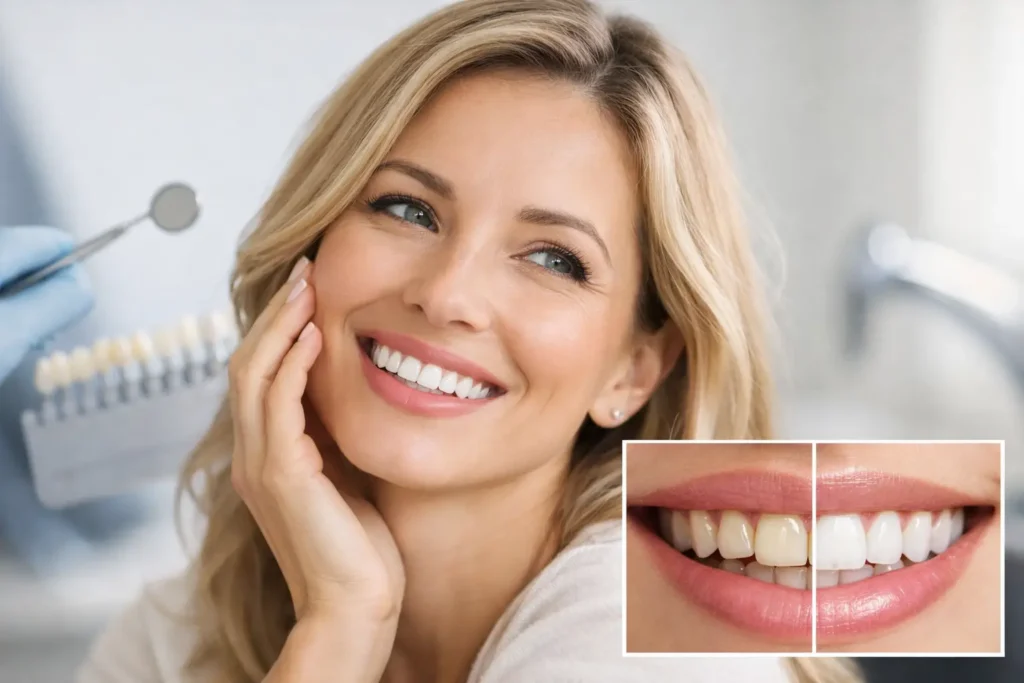
Teeth can darken from coffee, tea, red wine, tobacco, certain medications, trauma, or simply age. Professional whitening can be effective when the discoloration is on the surface or within the enamel. If a tooth is dark because of internal damage or an old restoration, whitening alone may not create an even result.
Chipped, worn, or uneven edges
Small chips and flattening at the edges of the teeth can make a smile look older or less balanced. Bonding or veneers may help, but it is also important to ask why the wear happened. Grinding, clenching, acid exposure, and bite problems can all contribute. If the cause is not addressed, cosmetic work may not last as long as it should.
Gaps and mild crowding
Not every alignment issue needs a dramatic solution, but even minor spacing or crowding can change the way a smile looks. In some cases, clear aligners are the most conservative way to create symmetry. In others, bonding can close a small gap without moving teeth. The better option depends on your bite, enamel, and overall goals.
Misshapen teeth or old dental work
Teeth that are naturally small, uneven, or irregular can affect the whole smile. So can old fillings, crowns, or bonding that no longer match the surrounding teeth. Replacing outdated dental work can make a bigger difference than many patients expect, especially when materials are chosen for both esthetics and biocompatibility.
Choosing the right cosmetic smile enhancement approach
The most successful cosmetic dentistry is personalized. Two people may want a whiter, straighter smile and still need very different treatment paths.
If the main issue is color, whitening may be enough. If shape is the problem, bonding or veneers may make more sense. If teeth are healthy but misaligned, clear aligners may preserve more natural tooth structure than covering teeth with restorations. If there are missing or damaged teeth, restorative treatment may need to come first.
That is one of the most overlooked parts of cosmetic care. Beautiful results are built on healthy foundations. If gum inflammation, decay, airway concerns, bite strain, or untreated infection are present, addressing those first usually protects both the appearance and longevity of the final result.
Conservative options often make a big difference
Many patients assume cosmetic dentistry always means veneers. Veneers can be an excellent option in the right case, but they are not the starting point for everyone.
Professional whitening is often the simplest place to begin when teeth are healthy and the goal is a fresher appearance. Cosmetic bonding can repair small chips, reshape edges, and close minor gaps with very little alteration to the natural tooth. Clear aligners can improve spacing and crowding in a way that benefits both appearance and bite.
These approaches are often appealing to patients who prefer less invasive care. They can also be easier to phase over time, which helps when patients want to prioritize treatment based on budget, schedule, or comfort level.
When veneers or crowns may be the better answer
There are times when more comprehensive treatment is the most predictable option. Teeth with significant wear, deep discoloration, old restorations, or multiple esthetic concerns may not respond well to whitening or bonding alone. In those situations, veneers or crowns may provide more even, durable results.
The trade-off is that these restorations require more planning and, depending on the case, more tooth preparation than conservative treatments. That does not make them bad choices. It simply means they should be recommended for clear reasons, not as a one-size-fits-all cosmetic solution.
A careful dentist will explain what each option can and cannot do, how long it may last, and what maintenance is involved. Patients deserve to understand the difference between a quick improvement and a long-term investment.
A health-conscious view of cosmetic smile enhancement
A smile should not be treated as separate from the rest of the mouth. If a patient has chronic clenching, mouth breathing, gum disease, or sensitivity, those issues affect cosmetic planning. A wellness-centered approach looks at how treatment will feel, function, and hold up over time, not just how it will photograph.
This is especially relevant when selecting materials and techniques. Some patients want metal-free options or more biocompatible materials when possible. Others are concerned about preserving natural enamel and avoiding unnecessary drilling. Those are reasonable priorities, and they can often be incorporated into cosmetic treatment planning.
At a practice like Dr. Kamila Husain’s, that conversation may also include whether alignment changes could support airway health or whether replacing older dental work should be done in the context of the patient’s broader oral and systemic health goals. Cosmetic care can still be beautiful while staying grounded in a more thoughtful philosophy.
What to expect at a cosmetic consultation
A good cosmetic consultation should feel informative, not rushed. You should leave with a clearer understanding of what is causing your concern, what your options are, and which approach fits your priorities.
That usually starts with photos, a clinical exam, and a discussion of what you want to change. Some patients bring in reference photos, but the more useful conversation is often about what you want your smile to feel like – brighter, softer, more even, less noticeable, or simply more like yourself.
Your dentist should also look at your bite, gum health, existing restorations, wear patterns, and any signs of clenching or airway-related issues. These details help determine whether a cosmetic result is likely to stay stable.
If you are comparing treatment options, ask practical questions. How conservative is this option. Will it require maintenance or replacement. Will the result look natural with my face and skin tone. What happens if I do nothing for now. Those questions often lead to better decisions than focusing only on the fastest transformation.
Cosmetic results should still look like you
The best smile enhancements are usually the ones other people notice without knowing exactly why. Teeth can be brighter without looking opaque. They can be straighter without looking overly uniform. They can look refined without losing character.
That natural result comes from restraint as much as technique. Shape, translucency, proportion, gum line symmetry, and facial balance all matter. So does listening to the patient. Some people want a polished, high-impact look. Others want subtle improvement that blends in completely. Neither approach is wrong, but the plan should match the person.
For families and adults juggling work, health concerns, and busy schedules, cosmetic treatment also has to be realistic. Sometimes the best plan is phased. Sometimes the right first step is treating a single front tooth or replacing one old crown before deciding on anything more. Progress does not have to happen all at once to be meaningful.
A smile can absolutely be enhanced for cosmetic reasons, but the strongest results come when appearance, comfort, and health are all part of the same conversation. If you have been thinking about making a change, start with an honest evaluation and a plan that respects both your smile and your well-being.